Flea & Tick Season in Tulsa: How to Protect Your Family and Pets This Summer
If your kids or pets spend time outside, flea and tick season should already be on your radar.
Here in Tulsa and across Eastern Oklahoma—including Broken Arrow and Bixby—these pests show up fast in spring and stick around well into fall. Once temps stay above 70, activity ramps up quickly—and that’s exactly where we are right now.
And unlike grubs, chinch bugs, and other common lawn pests, fleas and ticks aren’t after your grass—they’re after your family and your pets.
They bite. Fleas can make life miserable for pets, and ticks here can carry disease. And once they settle into your yard, they’re tough to control without the right approach.
Let’s walk through what you need to know—and what actually works.
When Is Flea and Tick Season in Tulsa?
Flea and tick season in Tulsa usually runs from April through October, with peak activity in late spring and summer once temperatures stay above 70°F. Around Tulsa, Broken Arrow, and Bixby, that’s when these pests start showing up fast.
Fleas don’t waste time once it warms up. A single female can lay dozens of eggs a day, and those eggs can hatch in just a couple of days when conditions are right.
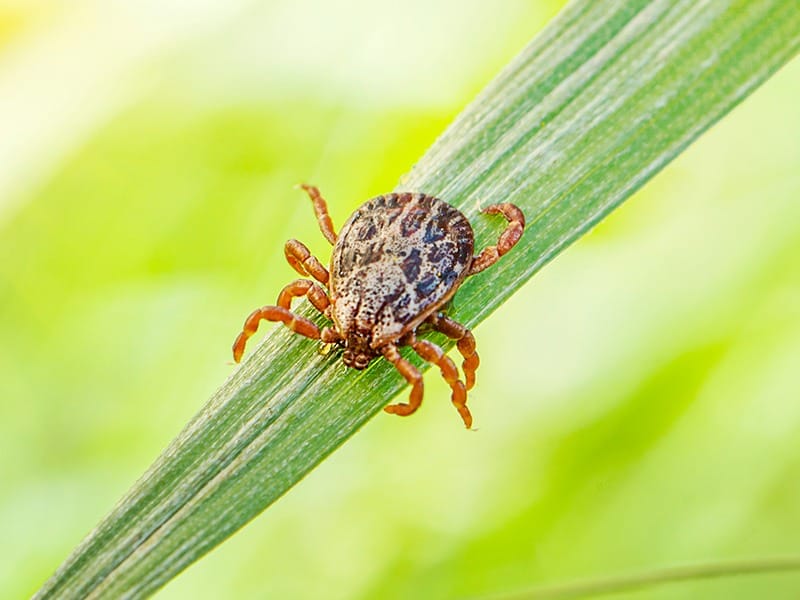
Ticks follow a similar pattern. The most common ones we see here—lone star ticks, American dog ticks, and black-legged ticks—are most active in late spring and early summer, with another bump in activity in the fall as temperatures cool off.
So if you’ve started noticing them, you’re not early—you’re right on time for peak season in Eastern Oklahoma.
Where Fleas and Ticks Hide Around Your Yard
Most homeowners assume fleas and ticks come from somewhere else. In reality, they’re often already in your yard.
Fleas stay in shaded, moist areas. Common hotspots include:
- Under decks
- Along fence lines
- Under shrubs and bushes
- Areas with mulch or leaf litter
- Spots where pets rest
Ticks prefer a little more cover. You’ll usually find them in:
- Tall grass
- Overgrown areas
- Wooded edges
- Near creeks or tree lines
They sit on grass blades or low branches and latch onto anything that brushes past.
If your yard has shade, moisture, or thick landscaping, you’ve got ideal conditions for both.
Why Fleas and Ticks Are More Than Just Annoying
These pests aren’t just irritating—they can pose real risks here in Oklahoma.
Ticks in our region can carry several illnesses, including:
- Rocky Mountain spotted fever
- Ehrlichiosis
- Tularemia
You’ll hear a lot about Lyme disease this time of year, but it’s less common in Oklahoma—even though the black-legged tick that spreads it is present here.
Fleas can cause serious skin irritation in pets and are one of the most common reasons for vet visits. They can also spread tapeworms.
For families in Tulsa, Broken Arrow, and Bixby—especially those with pets or young kids—this isn’t something to ignore.
Why DIY Flea and Tick Treatments Often Fall Short
A lot of homeowners try store-bought sprays or granules first. The problem? They rarely solve the issue.
Most over-the-counter products only kill what they hit directly. They don’t last long, and they don’t reach the areas where fleas and ticks actually live.
Fleas are especially tricky. Adult fleas only make up about 5% of the population. The rest—eggs, larvae, and pupae—are hidden in your soil and debris.
So even if you knock down what you see, the next wave is already on the way.
That’s why DIY treatments tend to feel like a temporary fix instead of a real solution.
How Professional Flea and Tick Control Works
Effective flea and tick control isn’t about spraying everything. It’s about treating the right areas the right way.
At Nutri-Green, we help homeowners across Tulsa and Eastern Oklahoma manage flea and tick activity with targeted, seasonal treatments built for Oklahoma yards.
Our program includes:
- A detailed inspection to find high-risk areas
- Targeted treatments in shaded zones, landscape beds, and yard edges
- Applications every 30–45 days during peak season, from April through October
By staying on a consistent schedule, we’re able to break the life cycle so flea and tick populations don’t keep coming back.
That’s how you get consistent control—not just a short-term fix.
What You Can Do to Reduce Activity
Professional treatment does the heavy lifting, but a few simple steps can help:
- Keep your lawn trimmed
- Clear out leaf litter and debris
- Trim back shrubs and low branches
- Add a buffer between your yard and wooded areas
- Talk with your vet about flea and tick preventative for your pets
- Check your pets and family for ticks after spending time outdoors
These steps help reduce activity, but they won’t fully prevent a problem on their own—especially during peak season in the Tulsa area.
Flea and Tick FAQs for Tulsa Homeowners
When should treatment start?
April is ideal, but starting now is still effective. The sooner you begin, the better control you’ll have.
Can fleas and ticks survive winter?
Some can. Ticks stay active during mild winters, and flea pupae can remain dormant until conditions improve.
Do pet preventatives replace yard treatments?
No. They protect your pet, but they don’t control the population in your yard.
Are treatments safe for kids and pets?
Yes. Once dry, treatments are designed to be safe for normal outdoor activity.
Get Ahead of Flea and Tick Season
Flea and tick season in Tulsa is already underway—and activity will only increase as summer continues.
The best time to act is before things get out of control. If you’re already seeing fleas on your pets or finding ticks after spending time outside, it’s not too late to get ahead of it.
Want a yard your family can actually enjoy again? Get a free quote from Nutri-Green today.

Testimonials




News, Blogs & Articles
Our Blog