Why Does Nutsedge Keep Coming Back After You Pull It?
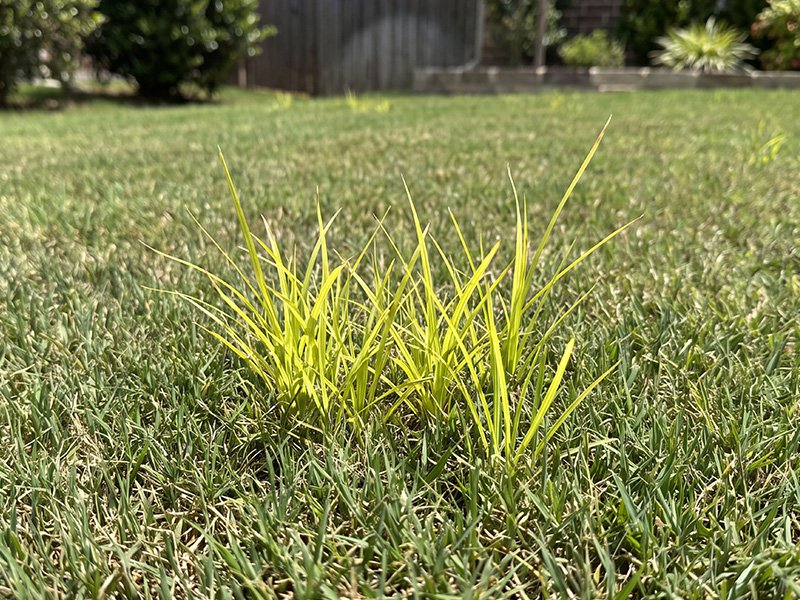
You spot a few tall, light green shoots growing above the rest of your lawn. They pull out easily enough, so you remove them and move on.
A week or two later, they are back.
That is one of the most frustrating things about nutsedge. Pulling the visible plant may make the lawn look better temporarily, but it usually leaves the part responsible for the regrowth underground.
Nutsedge is a common warm-season problem in Tulsa, Broken Arrow, Bixby, Jenks, and surrounding communities. It becomes especially noticeable during summer because it often grows faster than the surrounding turf and quickly rises above a freshly mowed lawn.
Getting it under control starts with understanding why it behaves differently from the grassy weeds homeowners are used to seeing.
Nutsedge Is Not Actually Grass
Nutsedge is often called “nutgrass” because its narrow leaves resemble grass, but it belongs to a different group of plants called sedges.
One of the easiest ways to tell the difference is by feeling the stem. Nutsedge has a solid, triangular stem that you can often detect by rolling it gently between your fingers. Its leaves also tend to be brighter or more yellow-green than the surrounding turf.
Yellow nutsedge is the type Tulsa-area homeowners are most likely to notice standing above the lawn during late spring and summer.
Because nutsedge is not a true grass or a broadleaf weed, products intended for those other weed groups may not control it. Correct identification matters before any treatment is selected.
Pulling Nutsedge Usually Leaves the Tubers Behind
The leaves you see above the lawn are only part of the plant.
Below the soil, nutsedge develops an underground network that can include roots, rhizomes, and small storage structures commonly called nutlets or tubers. Those tubers contain the energy the plant needs to produce new growth.
When you grab the leaves and pull, the stem often breaks away while the tubers remain in the soil. The lawn may look clear for a little while, but the underground plant is still capable of sending up another shoot.
That is why pulling the same patch repeatedly can feel as though you are accomplishing nothing. You are removing the symptom without necessarily removing the plant.
Nutsedge tubers can also remain dormant in the soil for years. Even after the visible growth seems to be gone, another tuber may eventually sprout and make the problem appear to have returned.
Can Pulling Nutsedge Make It Worse?
Pulling a few young plants is not guaranteed to make a nutsedge problem worse, especially when you can carefully dig out the entire plant before it develops more tubers.
The difficulty is getting everything.
In an established lawn, the underground parts can be deeper and more widespread than they appear from the surface. Digging aggressively may also disturb the surrounding grass without removing every tuber.
Hand removal works best when the infestation is small, the soil is loose enough to dig, and the entire underground plant can be removed. Once nutsedge is scattered across the lawn, pulling each shoot becomes far less practical.
Why Nutsedge Appears in Some Parts of the Lawn
Nutsedge is frequently associated with damp soil.
You may find it near:
- Low areas that stay wet after rain
- Downspout discharge points
- Irrigation heads that leak or apply too much water
- Poorly drained sections of the lawn
- Edges of landscape beds
- Areas receiving frequent, shallow irrigation
As Tulsa County Master Gardeners explains in its nutsedge-control guidance, nutsedge thrives in moist areas, whether that moisture comes from overwatering, irrigation leaks, or naturally wet soil. Once established, however, it can continue growing under more ordinary soil-moisture conditions.
That distinction matters. Nutsedge does not automatically mean a homeowner is watering incorrectly. A previous drainage problem, imported soil, construction disturbance, or an older patch of nutsedge can leave tubers behind long after the original moisture issue has improved.
Still, checking the irrigation system and drainage around the affected area is a smart part of the diagnosis.
Why Mowing Does Not Get Rid of It
Mowing cuts off the visible leaves but does not reach the underground tubers.
Nutsedge also tends to grow faster than common Tulsa turfgrasses, which is why it may rise above the lawn only a few days after mowing. Cutting it again can temporarily improve the appearance, but the plant will continue drawing energy from below the soil and producing new leaves.
Mowing lower is not the solution. Scalping the lawn can weaken the desirable turf, expose more soil to sunlight, and create additional room for weeds to compete.
Keeping the lawn at the appropriate height for its grass type is more helpful than chasing nutsedge with the mower.
Not sure whether you have Bermuda, zoysia, or tall fescue? Our guide to the types of grass in Tulsa can help you identify what is growing in your yard.
Why Regular Weed Killer May Not Work
Nutsedge requires a different approach from crabgrass, dandelions, or other familiar lawn weeds.
Standard lawn pre-emergent treatments are designed mainly to prevent annual weeds such as crabgrass from germinating. They do not eliminate established nutsedge returning from tubers already in the soil.
Many general broadleaf or grassy-weed products are also not designed for sedges. The treatment must be labeled for nutsedge and safe for the surrounding turfgrass.
Oklahoma State University’s guide to controlling weeds in home lawns emphasizes that effective weed control begins with correct identification. The weed’s life cycle, growth stage, turf type, application timing, and selected treatment all affect the result. Perennial weeds are generally more difficult to control because they can regrow from underground plant parts.
This is also why one treatment may not remove a long-established nutsedge population. New shoots can emerge from tubers that were inactive or were not connected to the foliage treated during the first visit.
Does Nutsedge Mean Your Entire Lawn Is Unhealthy?
Not necessarily.
Nutsedge can appear in an otherwise attractive lawn, particularly where the soil remains damp. However, widespread weeds can sometimes point to a larger condition that deserves attention.
Thin turf gives weeds more space to grow. Compacted soil can affect drainage and root development. Improper watering may keep the surface too wet, while poor fertility can prevent the grass from competing as strongly as it should.
Treating the nutsedge is important, but improving the lawn around it can make the property less inviting to future weed growth.
That is where full-service lawn care offers more value than reacting to each weed separately.
How Nutri-Green Approaches Nutsedge and Other Lawn Weeds
At Nutri-Green, weed control is part of a broader lawn care plan.
Our full-service lawn care programs include a 21-point lawn analysis, seasonal weed control, and fertilization designed around the needs of Tulsa and Eastern Oklahoma turf. Specialized weed-control services are also available for stubborn weeds that require more specific timing and treatment.
When nutsedge appears, the first step is confirming what the plant is. From there, our technicians can consider:
- How widely it has spread
- The type and condition of the surrounding grass
- Whether excess moisture or drainage is contributing
- Whether follow-up treatment may be needed
- What the rest of the lawn needs to grow thicker and compete more effectively
Nutri-Green’s lawn care goes beyond treating the weeds visible on the day of service. Our programs combine seasonal weed control, fertilization, and ongoing lawn evaluations to improve the condition of the turf around the problem. Specialized weed control is also available when nutsedge or another persistent weed requires a more targeted treatment.
Frequently Asked Questions
Does nutsedge die during the winter?
The visible leaves usually die back after freezing temperatures arrive, but the underground tubers can survive in the soil. New shoots may emerge when the soil warms again in spring or summer.
Can nutsedge grow in landscape beds as well as lawns?
Yes. Nutsedge can appear in lawns, planting beds, gardens, and other areas with suitable soil and moisture. Its underground growth can also make it difficult to remove without disturbing nearby plants.
Stop Pulling the Same Weed Again and Again
If nutsedge keeps rising above your lawn, no matter how many times you pull or mow it, the problem is probably still active below the soil.
Nutri-Green provides full-service lawn care throughout Tulsa, Broken Arrow, Bixby, Jenks, Owasso, Sand Springs, and surrounding communities. Our team can identify the weed, evaluate the conditions around it, and recommend a lawn care program that includes the weed control and fertilization your turf needs.
Seeing nutsedge rise above your lawn again? Request a free quote and let Nutri-Green take a closer look.

Testimonials




News, Blogs & Articles
Our Blog