Large Patch vs. Winter Dormancy in Zoysia Lawns
Every spring, we get the same question from homeowners across Tulsa and nearby communities like Broken Arrow, Jenks, and throughout Eastern Oklahoma:
“Why is my Zoysia lawn still brown when everything else is starting to turn green?”
Sometimes the answer is simple — Zoysiagrass wakes up later than most warm-season grasses. But sometimes those stubborn brown areas are a sign of large patch, a common lawn disease that affects Zoysia lawns across Oklahoma.
At Nutri-Green, we’ve been helping homeowners care for their lawns across the Tulsa metro since 2001. As a local family-owned company, we’ve seen just about every version of spring green-up confusion you can imagine.
From March through April, many lawns across Tulsa, Broken Arrow, Bixby, and surrounding Eastern Oklahoma communities look patchy or slow to wake up. Sometimes that’s perfectly normal. Other times, it’s the first sign that something else is going on.
The key is knowing what normal dormancy looks like — and when something else may be happening.
Let’s walk through how to tell the difference.

Quick Answer: Dormancy or Large Patch?
If you're searching for a quick answer, here's the short version.
It’s usually winter dormancy if:
- Most of the lawn looks uniformly tan
- The lawn slowly greens up as temperatures warm
- There are no clearly defined patches
It may be large patch if:
- Brown areas appear in distinct circular or irregular patches
- Surrounding turf begins greening while those patches stay straw-colored
- The patches remain after two or three mowings in spring
Large patch often develops during cool, wet conditions in fall and early spring, which is why symptoms tend to show up right as Zoysia begins to wake up.
If you’re unsure, a professional lawn evaluation is a great next step.
How Zoysia Normally Greens Up in Tulsa
Zoysia is a warm-season grass that waits for consistent soil warmth before it begins growing again.
Across our region, the typical spring timeline looks like this:
- Bermuda lawns begin greening in late March
- Zoysia usually greens up in April
- Shady or cooler areas may take longer
So if your entire lawn still looks fairly tan early in the season, that’s often completely normal dormancy.
The confusion begins when parts of the lawn start greening while other areas stay brown.
The Quick Way We Diagnose It in the Field
When our technicians inspect Zoysia lawns around Tulsa, Broken Arrow, and Bixby, the first thing we look for is a simple pattern:
Is the discoloration uniform — or patchy?
After more than two decades caring for lawns across the Tulsa metro, we’ve found that this quick observation usually tells us whether we’re looking at normal dormancy or something like large patch.
Signs It’s Probably Winter Dormancy
You’re likely looking at dormancy if:
- The lawn appears fairly evenly tan across the yard
- Green-up is slow but happening gradually
- There’s no sharp edge between green and brown turf
- The slowest areas to wake up are shady or cooler parts of the lawn
Zoysia often lags behind other grasses in spring, so patience is sometimes the best solution.
Signs It Could Be Large Patch (Zoysia Patch)
Large patch tends to look very different from dormancy.
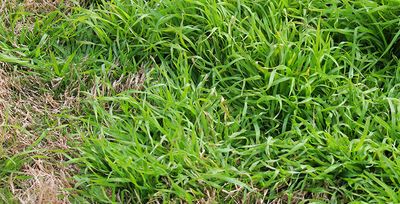
Instead of uniform color, you’ll often see distinct straw-colored areas that stay brown while the rest of the lawn greens up.
Common signs include:
- Circular or irregular patches of tan grass
- Clear boundaries between healthy turf and affected areas
- Patches appearing where turf stays cooler or wetter longer
- Areas that don’t improve while surrounding turf green
According to research from Oklahoma State University Extension, large patch is caused by a soil fungus that thrives during cool, moist conditions in fall and early spring.
A Simple Lawn Check
If you're unsure what you're dealing with, here are a few quick checks homeowners can do.
Walk the Lawn and Look for Patterns
Take a slow walk across your yard and look for patterns.
If most of the lawn looks similar, dormancy is likely the cause.
If you notice clearly defined patches, that’s when large patch becomes more likely.
If you're not sure which type of grass you have, start with our guide to common types of grass in Tulsa.
Watch What Happens After a Few Mows
Zoysia lawns often look rough before their first couple of spring mowings.
A rule of thumb we often share with homeowners across the Tulsa metro area:
If the lawn has been mowed two or three times and the same patches remain unchanged while the rest of the lawn greens up, dormancy is probably not the issue.
Think About Moisture and Thatch
Large patch tends to show up where conditions stay cool, damp, and slow to dry out.
Common contributors we see in lawns across Eastern Oklahoma include:
- Frequent watering during cool spring weather
- Heavy thatch layers
- Soil compaction and poor drainage
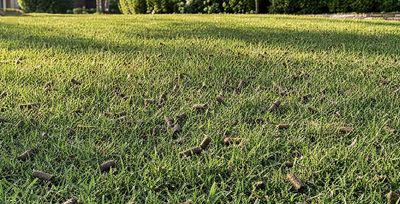
Improving airflow and soil health with practices like core aeration can often make a noticeable difference in overall turf health.
What To Do Next
Once you have a better idea what you’re seeing, the next step becomes clearer.
If It Looks Like Dormancy
The best approach is focusing on good spring lawn care basics:
- Mow at the proper height
- Keep mower blades sharp
- Avoid heavy fertilizing too early
- Water only when the lawn actually needs it
For homeowners who prefer a DIY approach, following seasonal lawn care practices recommended for Oklahoma lawns can help keep turf healthy through the growing season.
If It Looks Like Large Patch
This is something many homeowners don’t realize:
Large patch is usually prevented in the fall — not the spring.
By the time symptoms appear during spring green-up, the disease has typically been developing in the soil for months.
Steps that can help right now include:
- Avoid excessive watering during cool weather
- Delay heavy nitrogen fertilization until full green-up
Improve drainage and reduce thatch buildup
If patches persist as temperatures warm, it may be time to have a professional take a closer look.
The team at Nutri-Green provides full-service lawn care services throughout Tulsa, Broken Arrow, Bixby, and surrounding Eastern Oklahoma communities and can help determine exactly what’s happening in your yard. Request a free quote and find out what’s going on in your lawn.
Other Lawn Problems That Can Look Similar
Spring lawn discoloration doesn’t always come from one single issue.
A few common look-alikes include:
Shade Stress
North-facing lawns or areas under heavy tree cover often warm up slower in spring.
Traffic Damage
High-traffic areas near gates, play spaces, or dog paths may green up more slowly.
Other Lawn Diseases
Some fungal issues can produce similar symptoms. Comparing signs with common lawn diseases affecting Tulsa lawns may help rule out other problems.
For an accurate diagnosis, contact Nutri-Green to schedule a free 21-point lawn evaluation.
Frequently Asked Questions About Large Patch and Dormancy
How Long Should I Wait Before Assuming It’s Not Dormancy?
A helpful rule for Tulsa-area lawns:
If you’ve mowed two or three times and surrounding turf is greening while certain patches remain brown, it’s time to investigate further.
Can Zoysia Recover From Large Patch?
Often, yes.
Zoysia is a resilient grass, and many lawns recover once temperatures warm and growing conditions improve. Long-term success usually depends on preventing the disease cycle the following fall.
Is My Zoysia Dead?
Most lawns that appear dead in spring are simply slow to green up.
Zoysia can look rough for a while before active growth begins. If you're unsure whether your lawn is dormant, diseased, or thinning due to another issue, a lawn inspection can provide clarity.
Does Large Patch Come Back Every Year?
It can if the underlying conditions remain the same.
Cool temperatures, excess moisture, heavy thatch, and certain fertilization timing issues can allow the fungus to return each year. That’s why fall prevention strategies are often part of long-term lawn health planning.
Not Sure What Your Lawn Is Telling You?
Spring lawns can be tricky, especially with Zoysia.
If you're seeing stubborn brown patches that aren't improving, the team at Nutri-Green can help determine whether you're dealing with normal dormancy, large patch, or another lawn issue.
As a local family-owned lawn care company serving the Metro Tulsa area since 2001, we work with property owners throughout the Tulsa metro and across Eastern Oklahoma to keep lawns healthy.
Reach out anytime to schedule a lawn evaluation and get expert guidance tailored to your grass.

Testimonials




News, Blogs & Articles
Our Blog