Why Your Lawn Feels Spongy in Summer and What’s Causing It
If your lawn feels soft, bouncy, or almost like a sponge when you walk across it, you are not imagining things.
This is a common issue for Tulsa homeowners as temperatures rise, and it is usually a sign that something is happening below the surface.
In some cases, it is harmless. In others, it can point to a problem that needs attention.
Here’s what could be causing that spongy feeling and what it means for your lawn.
Why Does Your Lawn Feel Spongy in Summer?
If your lawn feels soft underfoot, it usually means something is weakening how well the grass is anchored to the soil. In Tulsa, this is often tied to root-related issues, moisture, or pest activity below the surface. Figuring out the cause early helps prevent bigger lawn problems later.
What Does a “Spongy” Lawn Actually Mean?
A spongy lawn typically means there is something interfering with the connection between the grass and the soil.
Instead of feeling firm underfoot, the turf may:
- Compress when you step on it
- Feel loose or bouncy
- Lift slightly in patches
This usually points to one of a few underlying issues.
Common Causes of a Spongy Lawn in Summer
Several conditions can create that soft, unstable feeling.
Thatch Buildup
Thatch is a layer of organic material that builds up between the grass blades and the soil.
A small amount is normal, but too much can:
- Trap moisture
- Block nutrients from reaching the roots
- Create a soft, cushion-like surface
As temperatures rise, thatch tends to hold more moisture, which can make the lawn feel even softer underfoot—especially if it has not been aerated or maintained regularly.
Grub Activity
Grubs are one of the most common causes of a spongy lawn in Tulsa.
As they feed on the roots of your grass, they weaken the turf’s ability to stay anchored in the soil.
This can lead to:
- Soft or bouncy areas underfoot
- Grass that lifts easily
- Thinning or browning patches over time
Because grubs feed below the surface, this often goes unnoticed until the lawn starts to feel different.
Excess Moisture or Poor Drainage
After heavy rain or frequent watering, lawns can hold onto moisture longer than expected.
If drainage is not ideal, the soil may stay soft, which can make the lawn feel unstable.
This is especially common in:
- Low spots
- Compacted soil
- Areas with heavy clay
Weak or Shallow Root Systems
When grass roots are not strong or well-developed, the turf does not anchor as firmly.
This can happen due to:
- Heat stress
- Poor soil conditions
- Inconsistent lawn care practices
In these cases, the lawn may feel soft even without visible damage.
How to Tell If Grubs Are the Problem
Not every spongy lawn means you have grubs, but there are a few signs to watch for.
You may be dealing with grub activity if:
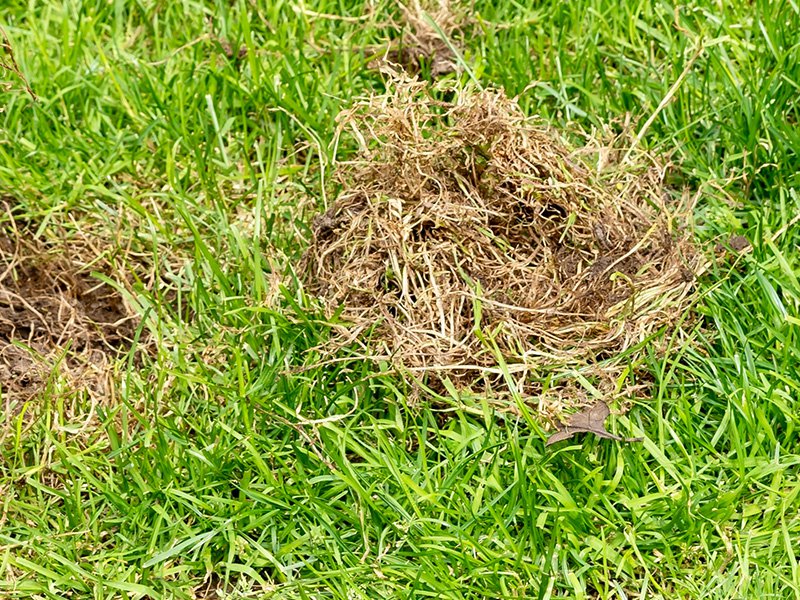
- The grass lifts easily like a piece of carpet
- You see brown or thinning patches developing
- Animals are digging in your yard
- The issue gets worse during peak grub seasons
If you suspect grubs, it is worth taking a closer look below the surface.
Why It’s Important Not to Ignore a Spongy Lawn
A spongy lawn is not just a cosmetic issue.
It is often an early warning sign that your lawn is under stress.
If the cause is not addressed, you could start to see:
- Larger areas of thinning turf
- Patchy or uneven growth
- Sections of lawn that die off completely
Catching the issue early can make a big difference in how well your lawn recovers.
How to Fix a Spongy Lawn
The right solution depends on what is causing the problem.
In many cases, fixing a spongy lawn takes more than a single treatment. It requires identifying the root cause and addressing it the right way, which is where professional lawn care makes a difference.
If grubs are involved, treatment may be needed to stop root damage and prevent further decline.
If thatch is the issue, services such as aeration or dethatching can improve airflow and soil contact.
If drainage or soil conditions are contributing, a more comprehensive lawn care approach may be needed to strengthen the root system over time.
When to Have Your Lawn Evaluated
If your lawn feels consistently soft or you notice thinning or browning areas, it is a good idea to have it evaluated.
A spongy lawn can be caused by several issues below the surface. Some of these problems are not always obvious right away and can continue to affect the lawn if left unaddressed.
A professional evaluation can help determine what is causing the issue, how severe it is, and the best approach to restore your lawn.
A stronger, well-maintained root system is much more resilient and better able to recover from damage below the surface. Without consistent treatment, issues can spread and lead to more noticeable turf loss over time. That is why many Tulsa homeowners rely on Nutri-Green’s lawn care services to keep their lawns healthy and protected throughout the season.
A Local Approach to Healthier Lawns in Tulsa
Understanding what is happening beneath your lawn takes local experience.
At Nutri-Green, we’ve been serving Tulsa and Eastern Oklahoma for more than 25 years and are trusted by more than 5,000 homes and businesses.
We understand how summer conditions, soil types, and seasonal pests affect lawns in this area because we see it every day.
That local experience helps us identify the real cause of issues like spongy turf and recommend the right solution for your lawn.
Get Your Lawn Back to Feeling Firm and Healthy
If your lawn does not feel right, it is time to take a closer look.
Nutri-Green helps Tulsa homeowners diagnose and fix issues like spongy turf with the right combination of treatments and lawn care services.
Request your free quote today and get the lawn you’ve always wanted!

Testimonials




News, Blogs & Articles
Our Blog