Those Coarse Clumps in Your Tulsa Lawn Are Probably Dallisgrass
You mowed over the weekend. By midweek, one clump in the yard is already standing taller than everything around it, with a stiff seed stalk poking straight up out of the middle.
Most homeowners glance at it, decide it's crabgrass, and figure it'll be gone once the weed control kicks in. Sometimes it thins out for a bit. Then that same clump shows back up, sometimes with a few new ones nearby.
By August, dallisgrass is often especially easy to spot. It's been standing taller than the surrounding Bermuda or zoysia through the summer, and seed heads that shoot up within days of mowing can make it hard to miss. If those clumps keep coming back, you may not be looking at crabgrass at all. It could be dallisgrass, and it behaves differently enough that it's worth knowing the difference.
What You're Seeing
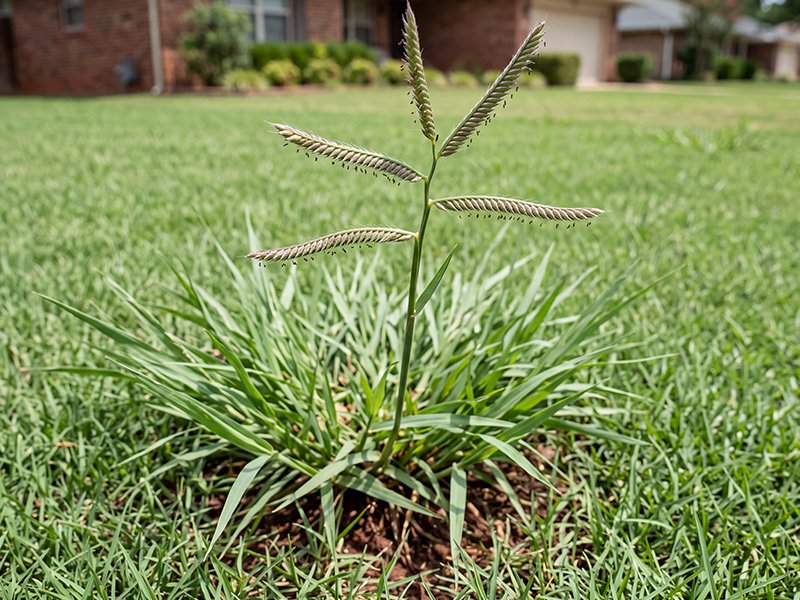
Dallisgrass grows as a wide, coarse-textured clump that gets a little bigger each year rather than spreading thin across the yard. The blades are lighter green and noticeably wider than the turf around them, which is often the first thing homeowners notice — a patch that looks slightly different from the rest of the lawn and stands taller within days of mowing.
Left alone, the clump sends up a tall seed stalk with several thin branches extending from the sides, often carrying small dark specks. Dallisgrass can appear in both Bermuda and zoysia lawns, and it often gains a foothold where turf is thin or soil stays moist. Low spots, drainage swales, lawn edges, and other areas where the surrounding grass is struggling can give it room to get established.
How to Tell It Apart from Crabgrass
Crabgrass and dallisgrass get mixed up constantly, and the confusion is understandable — both form coarse clumps that stick out against finer turf. A few details can make the difference easier to spot once you know what to look for.
Growth habit. Crabgrass spreads outward from a central point in a flatter, star-like pattern, with stems branching low to the ground. Dallisgrass stays more upright and grows as a rounder, denser clump that expands from the same crown year after year.
Seed heads. This is one of the easiest ways to tell them apart. Crabgrass typically produces several slender, finger-like spikes that spread from near the top of the stem. Dallisgrass sends up a taller stalk with several thicker seed-bearing branches spaced along the upper portion. Small dark anthers may also be visible on a mature dallisgrass seed head.
Timing. Crabgrass is an annual — it germinates from seed each spring and dies off with the first hard freeze. Dallisgrass is a perennial. The same plant can persist in the same spot for years, which is really the root of why it's so much more stubborn to deal with.
Why Dallisgrass Keeps Coming Back
This is usually where the frustration sets in. A homeowner puts down a pre-emergent in spring, sees weed control happening through the summer, and still watches the same clump return.
The reason is that dallisgrass isn't playing by the same rules as annual weeds like crabgrass. It's a perennial, which means an established plant can survive from one season to the next and grow again from the same crown. It can also produce seed that allows new plants to show up elsewhere in the lawn. It's a different growth structure, but the persistence is similar in principle to how nutsedge can keep coming back when underground parts remain in the soil.
A spring pre-emergent can help prevent certain weeds from germinating, but it won't eliminate an established dallisgrass clump that's already growing from a mature crown.
That's part of what makes dallisgrass so stubborn. Once it's established, control can be more difficult, and the right approach depends on factors such as your grass type, the size of the infestation, and the time of year.
By August, dallisgrass is often especially easy to spot because its coarse clumps and tall seed heads stand out against the surrounding turf. Identifying it correctly now gives you a much better starting point than assuming it's crabgrass and treating it like an annual weed.
What Actually Helps
The first step is confirming what you're looking at. Dallisgrass, crabgrass, and a few other coarse-clumping weeds can look similar enough at a glance that treating for the wrong one can waste time without addressing the actual problem.
From there, the right approach depends on the grass type, how established the dallisgrass is, and when it's being addressed. That's why accurate identification matters more than looking for a one-size-fits-all weed treatment.
The other half of the equation is the lawn itself. Dallisgrass and other weeds have an easier time getting established where turf is thin or struggling. Maintaining a dense, healthy stand of Bermuda or zoysia gives new seedlings less room to move in, which is why season-long lawn care matters alongside targeted weed control.
Frequently Asked Questions
Does dallisgrass actually hurt my Bermuda or zoysia, or is it just an eyesore?
Both. Beyond the coarse texture and color mismatch, established clumps crowd out the surrounding turf and take up space that healthy grass could otherwise fill in.
What happens if I just pull or dig up dallisgrass?
Removing the visible growth may make the lawn look better temporarily, but established dallisgrass can return if the crown remains. Once multiple clumps are scattered across the yard, manual removal also becomes much less practical, which is why proper identification and a targeted treatment approach matter.
Why does dallisgrass seem to grow faster after I mow?
Mowing doesn't make dallisgrass grow faster, but its coarse leaves and tall seed stalks can rise above the surrounding turf quickly, making the clump especially noticeable between mowings.
Get It Identified Before Next Season
If there's a clump in the yard that keeps outgrowing everything around it and shooting back up a couple of days after every mow, it's worth having someone confirm what it actually is before another season goes by.
Nutri-Green provides full-service lawn care throughout Tulsa, Broken Arrow, Bixby, Jenks, Owasso, Sand Springs, and surrounding communities. Our technicians can confirm what's growing in your lawn, determine the right next step for your grass type, and talk through what the rest of your turf needs to make it harder for weeds to take hold.
Spotted a coarse clump that keeps coming back? Request a free quote and let Nutri-Green take a look.

Testimonials




News, Blogs & Articles
Our Blog